Biochemistry: The Chemistry of Life
Showing posts with label biology. Show all posts
Showing posts with label biology. Show all posts
Tuesday, July 28, 2015
Monday, May 25, 2015
Science: Biology: Zoology: Live Wild Animal Webcams
This camera watches over Gowrie dam 24/7. In fact this is the oldest waterhole cam in Africa ... and the world! It’s been broadcasting LIVE from this spot since 1998. http://wildearth.tv/cam/djuma-waterhole
More wild webcams...
More wild webcams...

Sunday, March 15, 2015
Science: Biology: Cell Biology
 |
 |
 |
 |
 |
 |
Plant cells: Hank describes why plants are so freaking amazing - discussing their evolution, and how their cells are both similar to & different from animal cells.
Embryonic stem cells: An overview of early development of a zygote to an embryo. Embryonic and somatic stem cells.
Thursday, March 12, 2015
Career Tech: Women in Wildlife Careers & Wildlife Rehabilitators
Washington Wildlife Rehabilitators Association where people can get training to become professional wildlife rehabilitators.
Wildlife rehabilitation is a profession involving the treatment and care of sick, injured and orphaned wild animals with the goal of releasing them back to their natural habitats in the wild. Wildlife rehabilitation is not an attempt to turn wild animals into pets. ...released animals must be able to survive on their own and be an integral part of their species population, i.e., recognize and obtain appropriate foods, select mates of their own species to reproduce, and respond appropriately to potential dangers (people, cars, dogs, natural predators, etc.).
Learn 12 Steps to Protect Wild Animals
...a biology-related degree provides knowledge essential for quality hands-on animal care; develops an understanding of wildlife as they relate to humans and the environment; and gives you an edge in this increasingly competitive field.
Washington State residents should visit the WDFW Wildlife Rehabilitation Web Site to learn about the laws and licenses required to become a rehabilitator.
Wednesday, March 11, 2015

Wednesday, October 29, 2014


Tuesday, July 22, 2014
Wednesday, October 16, 2013
Science: Botany: Morning Glories
The Morning Glory Species Calystegia sepium is a species of bindweed, and very common in Washington, United States. It is a vine that twines itself around other plants. The leaves are simple type and the flowers are white and trumpet-shaped. There are several subspecies of Calystegia sepium, they are listed below:
 |
| Calystegia sepium |
- Americana, North America
- Angulata, North America
- Appalachiana, Eastern North America
- Binghamiae, California
- Erratica, North America
- Limnophila, South America
- Roseata, Western Europe, Coasts, Pink
- Sepium, Europe, Asia
- Spectabilias, Siberia, Pinkish
Science: Botany: Stinging Nettle
|
|

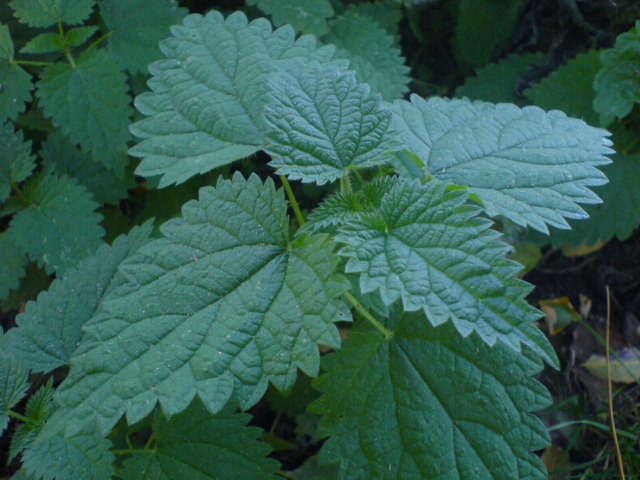
Wikipedia: Stinging Nettle
Science: Botany: Sword Fern, Oregon Grape, Hawthorns
.jpg/461px-Sword_Fern_(2973069306).jpg) |
| Sword Fern |
The Sword Fern (Polystichum munitum) is an evergreen fern native to Washington. Oregon, and California. The spores help relieve swelling from a sting from Stinging Nettle. It does best in cold weather.
Oregon Grape
The berries of the Oregon Grape (Mahonia nervosa) help treat: Giardia, Candita, Viral Diarrhea, and Cholera. It is an evergreen shrub. The berries are small and purplish-blue. They we're collected by Lewis and Clark on their expedition, and revealed to science in 1813.
.jpg/800px-Oregon_Grape_(4715021348).jpg) |
| Oregon Grape |
They are small trees with long thorns and smooth or scaly bark. The fruit are small and resemble small apples or rose hips. The fruit has a very bitter taste.
Wikipedia: Ferns
Wikipedia: Tall Oregon Grape
Wikipedia: Hawthorns
Tuesday, October 15, 2013
Science: Zoology: Coastal Giant Salamanders
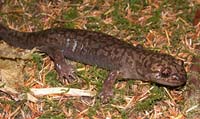 The Coastal Giant Salamander is a species of salamander in the Dicamtodontidae family. It is found only in the United States and Canada. It's natural habitats are temperate forests, rivers, freshwater lakes, and freshwater marshes. The adults can reach up to thirty-four centimeters (thirteen inches) in length. It has four toes on the front feet and five on the back. their tails are around forty percent of the total length of the salamander and is laterally compressed. The head, back, and sides have a marbled or reticulate pattern of dark blotches on a light brown or brassy-colored background. the head is broad with a shovel-like snout and a fold of skin across the throat called the gular fold. This species is one of the few salamanders that is capable of vocalizing.
Wikipedia: Coastal Giant Salamanders
Wikipedia: Salamanders
Saturday, July 13, 2013
Sunday, March 24, 2013
Science: CryptoZoology: The Jersey Devil
The Jersey Devil is said to a creature with the head of a goat long, skinny legs like a horse, bat-like wings, horns, a forked tail and small clawed arms like a t-rex.
Folklore says that the Jersey devil was born as follows: It was said that Mother Leeds had twelve children and after she had her thirteenth child that if she had another it would be the devil. It was a dark stormy night and Mother Leeds was in labor she was surrounded by friends and when the child was born It started out as a normal baby but then It changed into the Jersey Devil It is said that it killed the midwife and flew away up the chimney.
It was said that Mother Leeds was a witch, and the child's ( when I say child I mean the Jersey Devil) father was the Devil.The Jersey Devil was also called the Leeds Devil. ( I personally don't believe in the Jersey Devil ).
A local farmer shot an unidentified creature attempting to steal his chickens. And he claimed that none of 100 people could guess what it was. ( I presume he thought it was the Jersey
Devil). ( I think it was a coyote or cougar If they live in New Jersey which I presume they do ).
 |
| The Jersey Devil |
It was said that Mother Leeds was a witch, and the child's ( when I say child I mean the Jersey Devil) father was the Devil.The Jersey Devil was also called the Leeds Devil. ( I personally don't believe in the Jersey Devil ).
A local farmer shot an unidentified creature attempting to steal his chickens. And he claimed that none of 100 people could guess what it was. ( I presume he thought it was the Jersey
Devil). ( I think it was a coyote or cougar If they live in New Jersey which I presume they do ).
Tuesday, December 18, 2012
Science: Zoology: Nudibranchs
 |
| Nudibranch |
There are two classes of nudibranchs. There are the dorids and the aeolids. Dorids have a plume on there rear that contains their gills. And aeolids have cerata all over there backs to breathe.
Nudibranchs are hermaphroditic which means they have organs for both sexes. But they can't fertilize themselves. Some nudibranchs produce their own toxins while others get toxins from what they eat.
All known nudibranchs are carnivorous. They eat organisms ranging from sea sponges to other sea slugs and their eggs. The name nudibranch comes from the Latin word nudus which means naked and the Greek word brankhia which means gills.
Subscribe to:
Posts (Atom)